Why Bali Feels So Different: The Psychology, Lifestyle, and Investment Appeal Behind the Island
More Than Just a Destination
For decades, Bali has been known as one of the world’s most iconic travel destinations. Tourists visit for its beaches, culture, and tropical beauty—but many leave with something unexpected: a deep emotional connection to the island.
Some visitors extend their stay.
Others return multiple times.
And increasingly, many decide to invest in property or relocate entirely.
This raises an interesting question:
Why does Bali feel so different compared to other destinations?
The answer goes beyond tourism. Bali offers a unique combination of psychology, environment, lifestyle, and social dynamics that influence how people think, feel, and ultimately make decisions—including property investment.
In this article, we explore the deeper reasons behind Bali’s powerful appeal and how this directly impacts the real estate market.
1. The Psychology of Slower Living
One of the most immediate differences people notice when arriving in Bali is the pace of life.
Unlike fast-paced cities such as Singapore or Dubai, Bali operates on a slower rhythm. Daily routines feel less rushed, and people tend to prioritize balance over productivity.
This slower pace has measurable psychological benefits:
- reduced stress levels
- improved mental clarity
- increased mindfulness
- better work-life balance
Areas like Ubud are particularly known for their calming atmosphere, where daily life is influenced by nature, spirituality, and tradition.
For many visitors, this shift creates a strong emotional response—one that often leads to a desire to stay longer or return again.
2. The Impact of Nature on Human Behavior
Bali’s natural environment plays a major role in shaping how people feel on the island.
From lush rice terraces to ocean cliffs and tropical jungles, the island offers a constant connection to nature.
Scientific research has shown that exposure to natural environments can:
- lower cortisol (stress hormone) levels
- improve mood and creativity
- enhance overall well-being
In areas like Pererenan, residents wake up to views of rice fields and open skies. In Uluwatu, the dramatic cliffs and ocean views create a sense of openness and freedom.
This daily interaction with nature is one of the strongest reasons why Bali feels different from urban environments.
3. Architecture That Shapes Emotion
Architecture in Bali is not just functional—it is emotional.
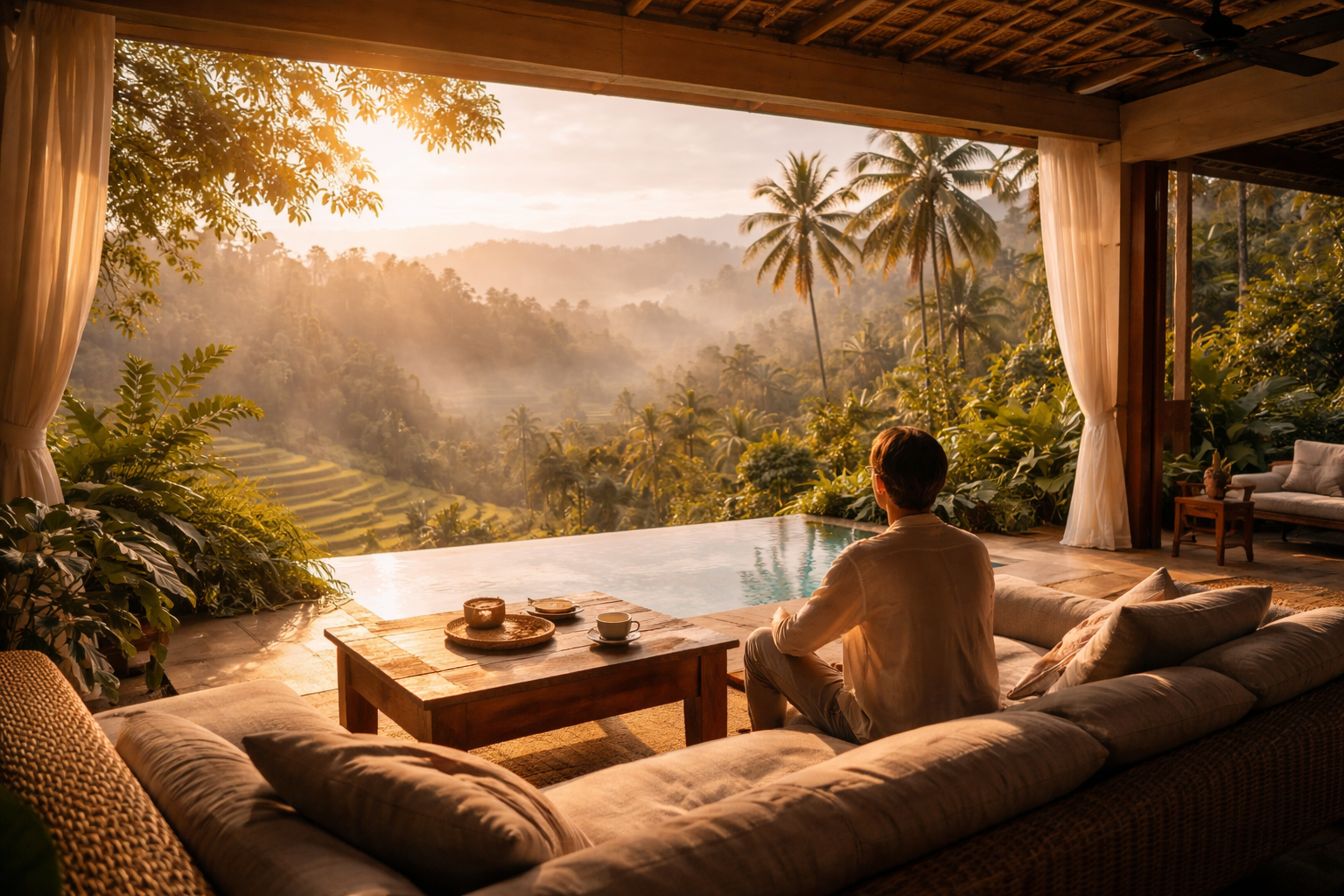
Many villas are designed with an emphasis on openness, light, and connection to the environment. Instead of closed spaces, properties often feature:
- open-plan living areas
- large windows and glass walls
- indoor-outdoor transitions
- private pools surrounded by greenery
Modern developments in Canggu combine contemporary design with tropical elements, creating spaces that feel both luxurious and relaxed.
This type of architecture influences mood by:
- increasing natural light exposure
- reducing feelings of confinement
- encouraging relaxation
For many buyers, experiencing this design firsthand can be a decisive factor in choosing to invest.
4. The Role of Culture and Daily Rituals
Bali’s cultural identity also contributes to its unique atmosphere.
Daily offerings, temple ceremonies, and community rituals are integrated into everyday life. These practices create a sense of rhythm and meaning that is often missing in modern urban environments.
Visitors frequently observe:
- daily offerings placed in homes and streets
- regular temple ceremonies
- strong community participation
This cultural richness adds depth to the experience of living in Bali, making it feel more than just a place—it becomes a lifestyle.
5. A Global Community in a Tropical Setting
Bali has evolved into an international hub where people from around the world come to live and work.
In areas like Canggu, it is common to meet:
- entrepreneurs
- creatives
- remote workers
- investors
This global community creates a dynamic social environment where ideas are exchanged and collaborations happen naturally.
Coworking spaces, cafés, and events provide opportunities for connection, making it easier for newcomers to integrate into the community.
6. The Rise of Remote Work and Location Freedom
The global shift toward remote work has significantly impacted Bali’s popularity.
As more people gain the ability to work from anywhere, lifestyle becomes a key factor in choosing where to live.
Bali offers:
- affordable cost of living
- high-quality villas
- inspiring surroundings
Digital nomads often choose to stay in villas rather than hotels because villas provide a more comfortable and productive environment.
This trend has increased demand for long-stay accommodations, particularly in areas like Ubud and Canggu.
7. Emotional Connection and Decision Making
One of the most overlooked factors in property investment is emotion.
In many markets, property decisions are driven purely by financial considerations. In Bali, however, emotion plays a significant role.
When people feel:
- relaxed
- inspired
- connected
they are more likely to:
- extend their stay
- return frequently
- invest in property
This emotional connection is one of the key drivers behind Bali’s growing real estate market.
8. Lifestyle as an Investment Factor
In Bali, property is not just an asset—it is part of a lifestyle.
Owning a villa offers more than financial returns. It provides:
- a personal retreat
- a holiday home
- a place for long stays
This dual benefit—lifestyle and investment—is one of Bali’s strongest advantages compared to purely urban markets.
Areas like Pererenan, Uluwatu, and Canggu continue to attract buyers who value both aspects.
9. Why People Keep Returning to Bali
Many visitors describe Bali as a place that “calls them back.”
This phenomenon is not just anecdotal—it reflects the combination of factors discussed in this article:
- natural beauty
- relaxed lifestyle
- strong community
- emotional connection
Unlike destinations that are visited once, Bali often becomes a place people return to repeatedly.
10. The Impact on Bali’s Property Market
All of these factors contribute to one key outcome:
increasing demand for property in Bali.
As more people experience the island and develop a connection to it, the number of potential buyers continues to grow.
This demand is particularly strong in areas such as:
- Canggu
- Pererenan
- Uluwatu
- Sanur
These locations offer a combination of lifestyle appeal and investment potential.
11. Bali Compared to Other Destinations
Compared to other destinations in Asia, Bali offers a unique mix of affordability, lifestyle, and cultural depth.
Cities like Bangkok or Phuket may offer strong tourism, but they often lack the same balance of nature, culture, and community.
This difference is what sets Bali apart in the global property market.
12. Long-Term Outlook
Looking ahead, Bali’s appeal is expected to remain strong.
Key drivers include:
- continued tourism growth
- increasing remote work adoption
- global demand for lifestyle-oriented living
As these trends continue, Bali is likely to remain one of the most attractive destinations for both lifestyle buyers and property investors.
Final Thoughts
Bali’s uniqueness cannot be explained by a single factor.
It is the result of a combination of:
- psychology
- environment
- culture
- community
- lifestyle
Together, these elements create an experience that is both powerful and lasting.
For many people, this experience goes beyond a simple holiday—it becomes a turning point that influences where they choose to live, work, and invest.
If you are considering exploring property opportunities in Bali, the team at JC Bali Property can help you find villas and land that align with your goals.